003 The Things I Buy — and Why 消费心理学 – 买东西,是因为需要还是情绪?

本篇内容:The Things I Buy — and Why
本篇从「购物行为与内在情绪」出发,带你反思我们为什么会购买某些东西——是因为需要、欲望、习惯,还是情绪补偿?
你将学习如何用英文表达「消费欲望、罪恶感、转变与自我觉察」等情绪语气,并探索从购物到创造的心理转折。

What kind of buyer are you?
本段呈现四种类型的购物者:极简实用型、趋势追随型、情感补偿型、与回忆收藏型。
透过这些人物的英文叙述,你可以观察不同的语气、句型与心理状态,辨识自己更接近哪一种购买心态,并练习用英文描写「我为何买」。

Reflection Practice — The Things I Buy and Why:
这一部分以 STATE → DO → FEEL 结构,帮助你练习如何用英文反思自己的购物行为。
你将学会使用情绪形容词与行为动词(如 impulse, comfort, regret, relief),
条理化地表达「我为什么买」、「我买了什么」以及「买完的感受」,从句型模仿到真实书写,练习觉察式英文表达。

延伸练习:试着将句型应用在真实生活情境中——
描述你最近一次购物的原因、心情与结果。
将消费行为转化为语言练习,让英文学习同时成为自我理解的过程。


点选左上角按钮可以切换文字全英或双语

When I first started making my own money, I felt powerful — like I finally had control over my life.
I grew up hearing that money brings freedom, so I thought spending it meant I was free.

刚开始自己赚钱的时候,我感觉很有力量——彷佛终于能掌控人生。
我从小就听人说「有钱就有自由」,所以我以为「花钱」就代表我自由了。

Every paycheck felt like a little celebration.
I’d walk into a store “just to look,” and walk out with a new bag, a lipstick, or a gadget I didn’t need.

每次领薪水都像在庆祝。
我走进店里口口声声说「只是看看」,结果出门时手上多了一个包、一支口红,或一个其实不需要的小玩意。

Trendy clothes, skincare, phone cases, home décor — you name it.
Half the time, I didn’t even open the boxes.
But that quick swipe of a card felt like proof I was doing okay, that I was moving forward.

流行衣服、保养品、手机壳、居家装饰——你能想到的我几乎都买。
有一半甚至连盒子都没打开。
但刷卡那一瞬间,让我觉得自己过得不错、人生在往前走。

I followed every trend and told myself I deserved it.
When guilt crept in, I’d say, “Well, I work hard.”
But the truth was, I wasn’t buying things — I was buying a feeling.

我追着潮流跑,还对自己说「我值得」。
内疚冒出来时,我会补一句:「反正我很努力工作。」
但说穿了,我买的不是物品——而是一种感觉。

Then came the decluttering phase.
Every few months, I’d pull everything out, make piles of “keep,” “donate,” and “maybe.”
It felt liberating for a week, and then the midnight scrolling returned.

接着是断舍离时期。
每隔几个月我就把东西全部翻出来,分成「保留」「捐赠」「再想想」。
那种轻松只维持一两周,之后半夜滑购物网站的习惯又回来了。

It turned into a cycle — buy, regret, declutter, repeat.
The funniest part?
When I first learned to swim, I couldn’t even float, but I had gear like an Olympic athlete.
Just kidding — but you get the point.

于是形成了一个循环——买、后悔、断舍离、再重来。
最好笑的是:刚学游泳时我连漂浮都不会,装备却齐全到像奥运选手。
开玩笑的啦——但你懂我的意思。

Shopping stopped feeling fun.
I felt tired — like I was chasing something I couldn’t catch.
My apartment looked neat, but my mind felt crowded.
Then I checked my savings and realized nothing had grown.

购物不再有趣,我只觉得累——像是在追一个永远抓不到的东西。
房间看起来整齐,心却很拥挤。
某天我看了一下存款,才发现多年来几乎没增加。

That’s when I opened up to a friend.
She listened and said, “Maybe don’t just stop spending — redirect your focus.
Start creating.”
I didn’t fully get it, but the words stayed with me.

那时我把心事告诉朋友。
她听完说:「与其只逼自己别花钱,不如把注意力挪开——去创造。」
我一开始不太懂,但她的话留在我心里。

A few weeks later, by pure chance, I found my dad’s old camera while cleaning the closet.
I wiped off the dust, curious whether it still worked, and decided to take it outside.
That weekend, I started taking photos — morning light on the kitchen table, reflections in bus windows, strangers holding hands at crosswalks.
It wasn’t planned, but something about capturing quiet moments made me feel calm again.

几周后,机缘巧合之下,我在整理衣柜时发现了爸爸送我的旧相机。
我随手擦去灰尘,心想不知道还能不能用,于是决定拿出去试拍。
那个周末,我开始拍照——厨房桌上的晨光、巴士窗上的倒影、斑马线上牵手的路人。
一切都不是刻意的,但捕捉那些安静瞬间的过程,让我重新感到平静。

At night, instead of browsing shopping apps, I browsed my own shots.
I edited colors, cropped edges, added tiny captions.
I stopped needing to buy inspiration — because I was making it.

晚上我不再逛购物网站,而是翻看自己的照片。
调色、裁边、写下一小行说明。
我不再需要「买灵感」——因为我正在创造它。

Around the same time, I began running.
Ten minutes at first, barely breathing, then longer.
It became my morning ritual: lace up, step outside, listen to my footsteps before the city wakes up.

差不多同一时间,我开始跑步。
一开始只有十分钟、气喘吁吁,后来慢慢加长。
它成了我的晨间仪式:绑好鞋带、走到户外,在城市苏醒前听见自己的脚步。

Those simple routines filled the space that shopping used to fill.
I wanted movement and meaning, not another box at my door.
Months passed before I noticed I hadn’t bought anything useless.

这些简单的日常,填满了过去靠购物填补的空白。
我渴望的是流动与意义,而不是门口又一个纸箱。
几个月过去,我才发现自己很久没有乱买了。

When my friend asked what changed, I laughed.
“I guess I was never buying things — I was buying comfort.”
Now, the things I buy have a reason: a lens I’ll use for years, running shoes that carry me forward, a coffee I actually have time to enjoy.

朋友问我「哪里变了」时,我笑了。
「我想我从来不是在买东西——我是在买安慰。」
而现在,我买的东西都有理由:会用很多年的镜头、带我向前的跑鞋、以及我真的有时间细细品尝的一杯咖啡。

I used to think happiness came from what I owned.
Now I know it comes from where I place my energy.
When my heart has direction, my wallet finally finds peace.

我曾以为幸福来自拥有什么。
现在我知道,它来自我把心力放在哪里。
当心有了方向,钱包也终于得以安静。


What kind of buyer are you?

We all spend money for different reasons — comfort, habit, identity, or meaning. These four voices show how buying is never just about things — it’s about who we are and what we seek.

每个人花钱的理由都不同——为了安慰、为了习惯、为了身份、或为了意义。 这四种声音展现了:购物从来不只是关于物品,而是关于我们是谁、在追寻什么。选择与你相似的部分,改写成你自己的版本。


A. The Minimalist Worker – “Too Busy to Buy”

I work as a project manager in a tech company, and my days are a mix of meetings, deadlines, and endless updates.
Shopping used to be fun when I was younger, but now it just feels like another task on my to-do list. There are too many choices — when I see a hundred versions of the same product, I lose patience before I even start comparing. So I buy the same things again and again: the same notebook, the same shampoo, the same sneakers.
If it works, I stick to it.
For me, simplicity saves time, energy, and peace of mind.

我是一名科技公司的项目经理,每天都被会议、截止日和报告淹没。 年轻时购物曾让我开心,但现在只觉得那是待办清单上的另一项任务。 选择太多——当我看到同一产品的上百种版本时,还没开始比较就已经觉得厌倦。
所以我反复购买同样的东西:同样的笔记本、洗发精、球鞋。 「能用就不要换」成了我的原则。
对我而言,简单让我省时间、省力,也保有心的平静。
If it works, don’t replace it. → 表「如果它好用,就不需要替换」,常用于极简主义生活哲学。

B. The Trend Follower – “Buy Now, Regret Later”

I used to dream of becoming a fashion influencer.
My closet was like a trend museumcottagecore dresses, oversized blazers, everything I saw online. Each time I clicked “add to cart,” I told myself this outfit represented a new version of me.
But deep down, I knew it was just impulse.
Whenever I felt stressed or lonely, online shopping became therapy.
For a few minutes, I felt seen, confident, alive. But when the packages arrived, the excitement disappeared faster than the unboxing video.
Now I’m trying to tell the difference between what I like and what I truly need.

我曾经梦想成为时尚网红。 我的衣柜就像潮流博物馆——从田园风洋装到宽版西装外套,网上看到的几乎全都有。 每次点下「加入购物车」时,我都告诉自己那代表全新的我。 但其实,我心里清楚那只是冲动。
每当我感到压力或孤单时,网购就成了我的心理治疗。 短短几分钟,我觉得自己被看见、有自信、充满活力。 可当包裹送到时,那股兴奋比开箱影片还快消失。
现在我正在学着分辨——什么是我喜欢的,什么才是我真正需要的。
add to cart → 网购常用语,表示「加入购物车」。
the difference between what I like and what I need → 表「喜好与需求之间的界线」。

C. The Over-Spender – “Buying Comfort”

There was a time when I thought buying things could fix how I felt. I bought self-help books, aromatherapy oils, yoga mats — all in the name of self-care.
But most of them stayed unopened. I wasn’t really investing in healing; I was collecting symbols of comfort, as if owning them could make me feel whole.
Each purchase was like a promise: “This will make me better.”
But the truth? It never did. One day, I looked around my apartment — shelves full of untouched “healing tools” — and realized I was trying to buy peace instead of finding it.
Now, I still like beautiful things, but I ask myself before buying:
“Will this truly help me, or just help me escape?”

有一段时间,我以为购物能修复内在。
我买了各种心灵成长书、芳疗精油、瑜伽垫——都打着「自我照顾」的名义。
但大多数都没拆封。
我并不是在投资疗愈,而是在收集「安慰的象征」,彷佛拥有它们就能让自己完整。
每次购买都像一个承诺:「这会让我变好。」
但事实是,它从没让我好过。
某天,我望着满屋未使用的「疗愈工具」,才明白我追求的不是平静,而是想用购物换得平静的假象。
现在我仍喜欢美好的事物,但会在购买前问自己:
「这真的能帮我吗?还是只是帮我逃避?」
buy peace instead of finding it → 表「想用购物换得心灵平静」,隐喻逃避式消费。

D. The Sentimental Collector – “Buying Memories”

I’m not into brands or trends.
I buy postcards, little souvenirs, and books from every city I visit. Each item feels like a memory I can hold. But as years passed, my shelves became crowded.
One day, while dusting, I realized I wasn’t keeping memories — I was keeping proof that I had lived happily.
That hit me hard. Now I still buy things, but only one per trip — something small, meaningful, timeless.
I’ve learned that buying isn’t about owning; it’s about connecting — to moments, to stories, to the feeling of being alive.

我对品牌和潮流没兴趣。
我买明信片、小纪念品,还有每座城市的一本书。 每样东西都像一段能触摸的回忆。 但随着时间过去,书架越来越拥挤。 有一天,我在擦灰时突然意识到:我保存的不是回忆,而是「幸福的证据」。 那一刻我很震撼。
现在我依然会买东西,但每次只买一件——小巧、有意义、能长久留存的。
我明白购买的意义,不在于拥有,而在于连结:
与时光、与故事、与活着的感觉。
buying isn’t about owning; it’s about connecting → 表「购物不为拥有,而为连结」,象征成熟心境。


Emotional Word Map — 常见情绪词与表达练习

在反思购物行为时,我们往往混合了多种情绪:想要、放松、焦虑、内疚、满足。
这一部分帮你扩展情绪词汇,并学会自然地表达购物背后的感受。

Emotion English Expression Example Sentence
Comfort seek comfort in buying I used to seek comfort in buying things I didn’t need.
我过去常透过购物寻找安慰。
Guilt feel a wave of guilt after shopping I felt a wave of guilt after buying something I didn’t even like.
买了其实不喜欢的东西后,我感到一阵罪恶感。
Relief feel relieved once I decide not to buy I felt relieved when I closed the app and walked away.
关掉购物App、放下手机时,我反而感到轻松。
Control buy things to feel in control I used to buy planners and notebooks to feel in control of my life.
我过去常买笔记本来找回掌控感。
Escape use shopping as an escape Sometimes I used shopping as an escape from stress or boredom.
有时我把购物当成逃避压力或无聊的方式。
Joy feel genuine joy when buying something meaningful I feel genuine joy when I buy something I’ll use every day.
当我买到每天都会用到的东西时,感到真正的喜悦。

小练习:从上表选出三个最能代表你的情绪,用它们各写一句你自己的英文句子。


Reflection Practice: The Things I Buy — and Why


Use the structure STATE → DO → FEEL to reflect on your own spending habits.
Think about what triggers your buying decisions, what kinds of things you tend to purchase, and how those choices make you feel afterward.

使用 STATE → DO → FEEL 的结构,反思你的消费习惯。
思考是什么触发你的购买行为、你通常会买哪些东西,以及这些选择带给你的感受。

Step 1 — STATE

Describe your current relationship with buying.
When do you usually feel the urge to buy something — when you’re happy, stressed, or just bored?
What kind of things catch your attention the most?

描述你目前的消费状态。
你通常在什么时候会想买东西——开心、压力大,还是只是无聊?
哪些类型的东西最容易吸引你?
feel the urge to… → 表「突然有冲动去做某事」。

Useful words: impulse, comfort, reward, stress, boredom, desire, control, escape

常用词汇:冲动、安慰、奖励、压力、无聊、欲望、控制、逃避

Sentence options:
• My shopping habits usually reflect how I feel — sometimes relaxed, sometimes anxious.
• I tend to buy things when I feel tired, lonely, or excited.
• Buying something makes me feel calm, rewarded, or in control — at least for a moment.

句型练习:
・ 我的购物习惯通常反映我的情绪——有时放松、有时焦虑。
・ 我往往在疲惫、孤单或兴奋时买东西。
・ 买了东西会让我觉得平静、有奖励感或掌控感——至少那一刻是这样。

Step 2 — DO

Explain what you actually buy and how you decide.
Do you plan your purchases, compare options, or just act on impulse?
Do you buy more for function or emotion?

说明你实际会买什么,以及你是怎么决定的。
你会计划购物、比较选项,还是凭冲动下单?
你的消费更偏向功能需求,还是情绪反应?
act on impulse → 表「凭冲动行动」。

Useful words: essentials, collections, trends, comfort items, gifts, online shopping, secondhand, minimalist

常用词汇:日用品、收藏、潮流、安慰性物品、礼物、网购、二手商品、极简主义者

Sentence options:
• I usually buy everyday things like coffee, notebooks, or skincare — small comforts that make my day easier.
• When I shop, I look for something useful or something that feels new.
• I don’t buy often, but when I do, it’s usually because I want to reward myself or relieve stress.

句型练习:
・ 我通常买日常用品,比如咖啡、笔记本或护肤品——能让生活更轻松的小物。
・ 购物时,我会找实用的东西,或能带来新鲜感的物品。
・ 我不常购物,但每次买通常是为了犒劳自己或减压。

Step 3 — FEEL

Reflect on how you feel after buying something.
Do you feel satisfied, guilty, excited, or regretful?
What emotions do you really chase when you spend — peace, joy, control, or belonging?

反思购买之后的感受。
买完东西后你会感到满足、罪恶、兴奋,还是后悔?
你在花钱时,真正追求的情绪是什么——平静、快乐、掌控感,或归属感?
chase emotions → 表「追逐情绪满足」,常用于反思性消费语境。

Useful words: satisfaction, regret, calm, guilt, excitement, control, emptiness, relief

常用词汇:满足、后悔、平静、罪恶感、兴奋、掌控、空虚、释然

Sentence options:
• After buying something, I usually feel calm or satisfied because it gives me a small sense of control.
• After shopping, I often feel regretful because I know I didn’t really need it.
• Sometimes I realize I was trying to comfort myself through shopping, not to solve the real problem.
• Now I’m learning to pause and breathe before I buy — to ask if it’s comfort or habit.

句型练习:
・ 买完东西后我通常觉得平静或满足,因为那让我感觉有点掌控感。
・ 购物之后我常常有点后悔,因为我知道其实不需要。
・ 有时我意识到,自己是在用购物安慰自己,而不是解决问题。
・ 现在我学会在购买前先停下来呼吸一下,问问自己:这是安慰,还是习惯?

Examples — Combine STATE, DO, and FEEL

參考上方的Sentence options, 从每栏中各选一句或两句,练习表达你的「状态 → 感受 → 行动」。
並跟读音档,最后尝试改写成属于你的版本。

Example 1 — The Minimalist Worker
State: I buy only what I need because too many choices drain me.
Do: I repeat the same products I trust.
Feel: I feel calm and efficient.

范例一 — 极简上班族
状态:我只买真正需要的东西,因为太多选择让我疲惫。
行动:我重复购买熟悉可靠的物品。
感受:我觉得平静又高效。

Example 2 — The Trend Follower
State: I buy when I feel bored or insecure.
Do: I scroll online shops and add items that make me feel “new.”
Feel: The excitement fades fast, and I’m left a bit empty.

范例二 — 跟风型消费者
状态:我常在无聊或缺乏自信时购物。
行动:我滑网店、把能让我感觉“焕然一新”的商品加入购物车。
感受:兴奋感消失得很快,留下的是一点空虚。

Example 3 — The Comfort Seeker
State: I shop when I feel tired or lonely.
Do: I buy small treats like snacks or candles.
Feel: It brings warmth for a while, but not real rest.

范例三 — 安慰型买家
状态:我在疲惫或孤单时会购物。
行动:我会买点心或蜡烛之类的小确幸。
感受:那份温暖能维持一阵子,但无法真正让我休息。

Example 4 — The Sentimental Collector
State: I buy things to remember moments.
Do: I pick one small souvenir from each trip.
Feel: I feel connected to places I’ve been, without needing to own too much.

范例四 — 情感收藏者
状态:我通过购买东西来保留回忆。
行动:每次旅行我只买一个小纪念品。
感受:我感到与那些地方依然连结,而不必拥有太多。

Try Writing Yours

Use one sentence for each step. Keep it short, natural, and true to you.

每个步骤一句话即可,保持自然真实。

These days, I buy things when…
I used to think buying meant
What I’ve learned from my spending is…

最近我通常在……时购物。
我以前认为购物代表……。
我从消费中学到的是……。

These days, I buy things when I feel…
I used to believe shopping could…
Now I realize what I really want is…

最近我通常在感到……时会购物。
我过去以为购物可以……。
现在我明白,自己真正想要的是……。

最後…額外提供主題
→ From Buying to Meaning — 从购买到意义

最后我想跟大家说一下,这篇文章除了主题是讨论购物,我也想引起大家思考…「我们为什么买」。
学习语言是为了沟通、表达,当你能清楚表达自己的观点、价值观、想法的时候,其实你也已经深思过了 !
希望大家除了练习到英文,也能练出购物的清醒感,哈

When we stop treating shopping as comfort or escape, we can reclaim our creative energy.

当我们停止把购物视为「安慰」或「逃避」时,就能重新找回「创造」的能量。 (下面这一部分帮助你练习用英文表达从消费到创造的心态转折。)


I used to buy things to feel inspired, but now I create something small to feel alive.

我过去靠买东西找灵感,现在靠创造小事找活力。

I used to reward myself with shopping, but now I reward myself with rest.

我过去靠购物犒劳自己,现在靠休息充电。

I used to buy tools to start new hobbies, but now I start first and buy later.

我过去先买装备才开始兴趣,现在先行动再决定要不要买。

I used to buy comfort, but now I find it in movement — walking, writing, or taking photos.

我过去靠购买找安慰,现在靠行动找平静——散步、写字、拍照。
002 My Morning Routine 我的晨间日常,在混乱中找回节奏

本篇内容:关于「我的早晨日常」。
这篇文章从理想与现实的对比出发,带你观察生活节奏与情绪的真实落差,并学习用英文表达「日常感」、「现实感」与「自我连结」的语气。

Q&A:透过 Q&A 练习,观察不同性格的「早晨样貌」——自律型、创作型、家庭型、内省型、现实型—— 想想看你属于哪一类,并模拟出真实贴近自己的回答。

Daily Expression:收录多种生活化的英文句子,帮助你描述早晨习惯、起床心情与化妆、早餐、出门等日常动作。
你可以挑选与自己最接近的句子,反复跟读(shadowing),再改写成属于你的版本。

延伸练习:将句型转化成你的日常表达。
这篇练习不只是学句子,而是练习如何「用英文说出真实生活」。
参考上方不同类型的范例,挑选与你相似的语气与节奏,组合成属于你的早晨叙事。


点选左上角按钮可以切换文字全英or双语

My Morning Routine

You know, sometimes I imagine what my perfect day would look like. In that version, I wake up slowly — no rush, no noise, just soft sunlight coming through the window. I stretch, take a deep breath, and head to the kitchen to make myself a cup of coffee. The smell fills the room, and I actually have time to enjoy it.

有时候,我会想象理想中的一天会是什么样子。 在那个版本里,我慢慢地醒来——没有急促、没有噪音,只有柔和的阳光洒进房间。 我伸个懒腰,深呼吸,然后走进厨房,亲手为自己冲一杯咖啡。 香气弥漫整个空间,而我真的能坐下来,好好享受那杯咖啡。


Then I open my closet and pick something simple but stylish — maybe a white shirt and soft linen pants. I do a light makeup: just sunscreen, a bit of concealer, some blush, mascara, and a nude lipstick. Nothing fancy — just the kind of look that says, *I’m awake, I’m calm, and I’m ready for the day.* I put on my watch, pack my bag neatly, and walk out the door with that peaceful, effortless kind of energy.

接着我打开衣橱,挑一套简约却时尚的衣服——也许是一件白衬衫配亚麻长裤。 我化个淡妆:擦上防晒、遮瑕、一点腮红、睫毛膏,再加上裸色口红。 没什么花俏的,就是那种「我醒着、我平静、我准备好了」的样子。 戴上手表,整理好包包,优雅地走出门,一切都显得那么从容。


…That’s the dream. Now, let’s talk about reality.

……这是理想中的样子。 但现在,让我们回到现实。


In real life, my morning starts with five alarms. Yes, five. I set them on purpose — not because I’m that forgetful, but because I need time to gradually wake up. The first two alarms are basically for me to ignore. The third one tells me, “Okay, time to think about getting up.” And by the fourth, I finally open my eyes — which, honestly, is not bad.

在现实里,我的早晨是从五个闹钟开始的。 没错,五个。我是故意设的——不是因为我健忘, 而是因为我需要一点时间让自己「慢慢清醒」。 前两个闹钟基本上是让我继续赖床的。 第三个提醒我:「好啦,该考虑起床了。」 到了第四个,我终于睁开眼——说实话,这样已经不错了。


I grab my phone, realize I stayed up too late scrolling last night, and then I immediately tap my kid on the shoulder, “Come on, wake up, we’re gonna be late!”

我拿起手机,才发现昨晚又滑太晚, 然后立刻拍拍旁边的孩子:「起床啦,我们要迟到了!」


The next ten minutes? Chaos. I’m still in my pajamas, running between the bedroom and the kitchen. If we’re early enough, I’ll make breakfast. If not, we’ll just buy something on the way and eat it in the car. Then I wash my face, slap on some skincare — no makeup today — while reminding my kid to brush her teeth and find her shoes. It’s not glamorous, but it’s real.

接下来的十分钟?一片混乱。 我还穿着睡衣,在卧室和厨房之间来回跑。 如果时间还早,我会做早餐; 如果太赶,就直接出去买,在路上吃。 然后我洗脸、擦保养品——今天不化妆—— 同时还要一边提醒孩子刷牙、找鞋子。 一点也不优雅,但这才是真实的早晨。


After dropping her off at school, I finally get a moment to breathe. That’s when I open the *Meituan* app and order myself a coffee. It’s my small morning reward — a reminder that I still get to have a piece of the ideal day, even inside the real one.

把孩子送到学校后,我终于能喘一口气。 这时我会打开「美团」APP,帮自己点一杯咖啡。 那是属于我的小小早晨奖励——提醒我,即使在现实里,我仍然可以拥有一点理想生活的味道。


And the rest of the day? Well, it’s a mix — work, errands, emails, meals, small messes, small wins. By the time evening comes, I wash my face again, maybe do a mask, scroll a bit more than I should, and tell myself, “Tomorrow, I’ll wake up early, make that coffee, and start fresh.”

接下来的一天? 就是各种混在一起的日常——工作、跑腿、回信、吃饭、一些小混乱,也有小小成就。 到了晚上,我再洗一次脸,可能敷个面膜, 又滑手机滑太久,然后对自己说: 「明天,我一定会早起,煮那杯咖啡,重新开始。」


Maybe one day I really will. But for now, this — the imperfect, the busy, the sometimes chaotic — this is still *a day that actually feels like me.*

也许有一天我真的会做到。 但现在,这样的生活——不完美、忙碌、偶尔混乱—— 这才是真正属于我的一天。


Q: How does your morning usually start?

试着找出下列跟你情况相符的句子,反复跟读shadowing…


1. The Disciplined One — calm, structured, quietly confident

My mornings start early — around 6:00 a.m. I’ve been working out for three years now, and honestly, it changed everything. My skin feels tighter, and I don’t even buy firming creams anymore. After a quick shower, I put on light makeup — just sunscreen, concealer, and a bit of lip tint. I like to keep things simple. Breakfast? It’s already waiting for me. I prepare my salad and chicken the night before, so I just grab it from the fridge. Then I make my favorite — an iced Americano. That moment, sipping cold coffee in the quiet morning — that’s my kind of peace.

我的早晨从早上六点开始。我已经运动三年了,老实说,这改变了我很多。皮肤变紧实了,我甚至不再买紧实霜。洗完澡,我化个淡妆——防晒、遮瑕、一点润色唇膏。喜欢简单干净的样子。早餐?前一晚就准备好了。从冰箱拿出色拉和鸡肉,再泡一杯冰美式。那一刻,安静又冰凉的咖啡,就是我的平静。

Tone & Style: Steady, minimal, and self-disciplined. Each sentence feels intentional, like her morning itself.


2. The Hustle-Mode Worker — confident, ironic, playful

My mornings? They’re loud, fast, and kind of all over the place — but that’s just how I roll. I usually go to bed way past midnight because I’m editing videos or checking comments on TikTok. When my alarm rings, I don’t hit snooze — I just lie there for a second, scroll through messages, and somehow my brain wakes up before my body does. Then it’s go-time. I brush my teeth with one hand, reply to DMs with the other, grab a hoodie, and I’m out. People call it “chaotic.” I call it *creative flow*. I don’t need everything to be perfect — I just need the energy to keep things moving. And that, I’ve got.

我的早晨?吵、快、有点乱——但我就是这样活着。我通常半夜还没睡,因为在剪影片或看抖音留言。闹钟一响,我不会按贪睡键,只是躺着滑一下讯息,脑子比身体先醒。然后就开始行动。一手刷牙、一手回私讯,抓起帽T就出门。别人说这是「混乱」,我叫它「创作节奏」。我不需要完美,只要有能量推着我往前走。那就够了。

Tone & Style: Quick, witty, and full of energy. You can almost hear her multitasking while talking.


3. The Remote-Working Mom — warm, organized, nurturing

I wake up at five, before everyone else. The first thing I do is make myself a latte — that’s my quiet breakfast. It keeps me full until the family wakes up. At six-thirty, I start preparing breakfast for my husband and kid. By seven, we’re all sitting together at the table. I love that moment — it’s the only time of the day we all slow down together. After they leave, I start my work from home. It’s calm, predictable — and I like it that way.

我早上五点起床,趁大家都还没醒。第一件事是泡一杯拿铁——那是属于我的安静早餐,也能让我饱到家人起床。六点半开始做早餐给先生和孩子。七点,我们全家一起坐在餐桌上吃饭。我很珍惜那一刻——那是全家唯一慢下来的时间。他们出门后,我就开始在家工作。生活平稳、有节奏——我喜欢这样。

Tone & Style: Gentle and nurturing. Her sentences flow like a calm morning rhythm, steady but warm.


4. The Dreamy Overthinker — introspective, warm, slightly chaotic

I set my alarm for 6:30, but I usually spend ten more minutes just lying there, thinking about everything — and nothing. Some days I meditate, some days I scroll my phone. It depends on how heavy my thoughts feel. I love slow mornings, but life doesn’t always allow them. So I make my tea, look out the window, and tell myself, “Okay, let’s try again today.”

我把闹钟设在六点半,但通常会再多躺十分钟,什么都想,又什么都没想。有时候会冥想,有时候就滑手机,看当天心情。我喜欢慢早晨,但生活不总是允许。所以我泡杯茶,看着窗外,对自己说:「好吧,今天再试一次。」

Tone & Style: Soft, reflective, slightly poetic. She’s thinking more than doing — and that’s her calm.


5. The Overloaded Realist — tired but self-aware

Most mornings, I don’t even remember turning off my alarm. I just find myself already scrolling through group chats from work before I’m fully awake. Coffee comes first — not because I enjoy it, but because I need it to function. Sometimes I catch my reflection and think, “Wow, I look exhausted.” But then I remind myself, everyone’s just trying their best. Maybe tomorrow I’ll wake up ten minutes earlier… or maybe not. We’ll see.

大多数早晨,我甚至不记得自己关过闹钟。醒来时就已经在滑工作组的讯息。咖啡是第一步——不是因为喜欢,而是因为需要它让我运转。偶尔看到镜子里的自己,会想:「天啊,我看起来好累。」但我也会提醒自己——大家都在努力活着。也许明天我会早起十分钟……也许不会。再说吧。

Tone & Style: Honest and weary, but real. You can feel the fatigue mixed with quiet acceptance.


Daily Expression – Morning Edition

提供多种日常英文句型,帮助你练习如何以生活化语气描述「我的早晨」,包括闹钟习惯、睡眠模式、化妆流程与早餐选择。你可以挑选最贴近自己的句子,反复跟读(shadowing),再改写成你的口语版本。

1. 关于闹钟设定(Alarm habits)

I set two alarms, just in case I sleep through the first one.

我会设两个闹钟,以防第一个没听到。

My alarm goes off five times, but I only wake up at the fourth.

我的闹钟会响五次,但我通常第四次才醒。

I don’t snooze — I just lie there pretending I’m awake.

我不按贪睡键,只是躺着假装我醒了。

When the alarm rings, I get up right away.

闹钟一响,我就起来了。

I wake up before my alarm — my body clock just knows when it’s time.

闹钟还没响,我就起来了。

I don’t need an alarm. My body clock wakes me up at six every day.

我不需要闹钟,我的生理时钟每天六点会自动叫醒我。


2. 关于睡眠模式(Sleep pattern)

I go to bed before eleven, so I can wake up feeling fresh.

我会在十一点前睡,早上比较精神。

I usually sleep around two a.m. — it’s the only quiet time I get.

我通常凌晨两点才睡,因为那是唯一的安静时刻。

I keep saying I’ll sleep earlier, but my brain refuses to shut down.

我总说要早点睡,但脑袋就是停不下来。

I fall asleep as soon as my head hits the pillow.

我一躺下就能睡着。

I scroll my phone until my eyes can’t stay open anymore.

我滑手机滑到眼睛撑不住才睡。

I try to stick to a fixed bedtime, but real life doesn’t always cooperate.

我试着固定睡觉时间,但现实生活总是配合不了。


3. 关于化妆(Makeup routine)

I go for a no-makeup makeup look — sunscreen, concealer, and lip tint.

我喜欢裸妆感——防晒、遮瑕、润色唇膏。

If I’m running late, I just put on sunscreen and go.

如果赶时间,我只擦防晒就出门。

Doing my makeup feels like switching on my “ready for the day” mode.

化妆对我来说,就像切换成「准备迎接一天」的模式。

I do a full face of makeup — I actually enjoy the process, including fixing my hair.

我会化全妆,我真的享受这个过程,连发型打理也包括在内。

I rarely wear makeup; I just focus on good skincare.

我很少化妆,只注重保养。

I keep a small pouch in my bag for touch-ups during the day.

我包包里会放一个小化妆包,方便随时补妆。


4. 关于早餐(Breakfast habits)

I usually grab a salad and some chicken I prepared the night before.

我通常拿昨晚准备好的色拉和鸡肉。

Sometimes I just grab whatever’s in the fridge and call it breakfast.

有时我随便拿冰箱里的东西就当早餐。

We always eat breakfast together — it’s our little morning ritual.

我们全家都一起吃早餐,那是我们的小仪式。

I cook breakfast every morning — it helps me wake up.

我每天早上都会做早餐,这让我慢慢清醒。

I usually buy my breakfast on the way to work.

我通常是在上班路上买早餐。

I skip breakfast most days — just coffee for me.

我大多不吃早餐,只喝咖啡。


5. 关于出门(Heading out)

I pack my bag the night before, so mornings are stress-free.

我前一晚就收好包包,早上不用慌。

I grab my coffee, throw on a hoodie, and run out the door.

我拿着咖啡、套上帽T就冲出门。

I like walking out slowly, feeling the air before the day starts.

我喜欢慢慢走出门,感受一天开始前的空气。

I double-check everything before I leave — keys, phone, wallet.

出门前我会再三确认:钥匙、手机、钱包都带了没。

I drive to work listening to a podcast — it helps me shift into work mode.

我开车上班时会听Podcast,让我进入工作状态。

I walk my kid to school before heading to the office.

我会先送孩子上学再去公司。


Your Turn — 用英文說出你的想法

this part 将带你思考:
你的早晨最像哪一种自己?若能改变一件事会是什么?早晨情绪如何影响你的一天。 透过这些问题,你可以进一步用英文写出真实的想法与日常节奏,将句型转化成属于你的语言。


Use these prompts to reflect on your mornings — how they feel, what they mean, and what you might want to change.

用这些提问反思你的早晨——感受、意义,以及你想调整的地方。

1. What part of your morning feels most like “you”?
2. If you could change one thing about your mornings, what would it be?
3. How does your morning mood affect the rest of your day?

1. 你的早晨哪个部分最像「你」?
2. 如果可以改变早晨的一件事,你会选哪一件?
3. 你的早晨心情会如何影响一天的状态?


1. What part of your morning feels most like “you”?

Think about the moment that feels most authentic — maybe it’s making coffee, journaling, or just the quiet before everyone wakes up.
You can say,
“These days, my mornings feel most like me when I’m making coffee,”
or, “when I’m writing in my journal,”
or even, “when I’m sitting quietly before everyone wakes up.”

想想早晨中最能代表你的片刻——可能是泡咖啡、写日记,或只是所有人醒来前的安静。
你可以这样说:
「最近,我觉得最像我的早晨时刻,是当我在泡咖啡的时候,
或是当我在写日记、
又或者,当我静静坐着等待大家起床的时候。」

2. If you could change one thing about your mornings, what would it be?

Focus on one small thing — waking up earlier, slowing down, or spending less time on your phone.
You can say,
“If I could change one thing about my mornings, I would wake up a bit earlier,”
or, “I would slow down and enjoy my breakfast.”

专注在你想改变的一件小事——早点起床、放慢节奏,或减少滑手机的时间。
你可以这样说:
「如果我能改变早晨的一件事,我会早点起床,
或者放慢脚步,好好享受早餐。」

3. How does your morning mood affect the rest of your day?

Notice how your energy in the morning sets the tone — calm, rushed, anxious, or inspired.
You can say,
“My morning mood often makes the rest of my day feel calm and steady,”
or, “sometimes it makes my day feel rushed and tense.”

注意你的早晨情绪如何为一天定下基调——平静、匆忙、焦虑或受到启发。
你可以这样说:
「我的早晨心情常让整天感觉平稳而安定,
有时候,也会让这一天变得匆忙而紧绷。」

Try Writing Yours

Try writing your own lines.
Keep them short, real, and true to your daily rhythm.
You can start like this:
“These days, my mornings usually feel calm and quiet.”
“I wish my mornings could feel a little slower.”
“I’ve learned that my morning mood can shape how I see the whole day.”

试着写下属于你的句子,
保持自然真实,贴近你每天的节奏。
你可以这样开始:
「最近我的早晨通常是平静安静的。」
「我希望我的早晨能再慢一点。」
「我发现我的早晨心情,会影响我看待整天的方式。」

001 Why we keep searching the perfect method? 我们总在寻找「完美方法」却难以持之以恆

本篇内容:不断追寻完美方法却难以坚持一个方法。
这篇文章带你理解「为什么我们总想找到最完美的学习方式」,并学会用英文表达焦虑、犹豫与持续行动的语气。

I can say it like this:提供不同情境下的英文句子,让你挑选与自己最相似的表达,反复跟读(shadowing),再转化成属于自己的语言。

Your Turn — 用英文说出你的想法:透过 Q&A 形式,听听不同性格类型的回答,思考你属于哪一类,模拟出属于你的版本并反复练习,建立自然的口语反应力。

延伸练习:将句型改写成你的内容。我们真正缺的不是句型,而是「内容灵感」。
你可以参考上方 A/B/C 类型回答,挑选与你相似的部分,重新组合成属于你的英文句子。

Lesson 1 – Why we keep searching

点选左上角按钮可以切换文字全英or双语

Hey friends, today I want to talk about something I see all the time, in myself and in people around me. It’s about choices. We live in a world full of options, and sometimes that feels exciting. But the more choices we have, the harder it becomes to stick with one.

大家好,今天我想聊一个我常常在自己和身边人身上看到的现象:选择。我们活在一个充满选项的世界,一开始会让人很兴奋,但我们能选的选项越多,坚持一个/一件就越困难。

Think about shopping. Social media is full of full of influencers showing us the next best thing. You see a bag on Taobao, a skincare product, or a lifestyle trend on Xiaohongshu. You tell yourself, “This will finally make my life better.”
And then two weeks later, something new shows up, and suddenly the old thing feels boring.
This is the trap of consumerism.
We’re not just buying things—we’re buying the idea of becoming a “better me.”

想想看购物。社交媒体到处都是网红推荐「最新、最好」的东西。你在淘宝上看到一个包,在 TikTok 上看到一个护肤品,在小红书上看到一个生活的方式。你告诉自己:「这个一定能让我的生活更好。」但两周后,新的东西又出现了,旧的东西马上觉得无聊。
这就是消费主义的陷阱。我们买的不是东西,而是「变得更好的自己」这个幻想。

It’s not just shopping. The same thing happens with habits. For example, exercise. You watch a hundred workout videos—yoga, HIIT, Pilates, dance workouts. You spend more time comparing them than actually moving your body.
Or learning English. People keep asking, “Which book should I buy? Which app is the best? Which YouTuber should I follow?” And they spend months searching, but never stick to one method long enough to see results.

这不只发生在购物上,也发生在习惯养成上。比如运动。你看了一百个运动影片——瑜伽、高强度间歇训练、皮拉提斯、舞蹈课。结果花在比较的时间比实际运动的时间还多。或是学英文。很多人一直在问:「我应该买哪本书?哪个 APP 最好?要追哪个 油管博主?」结果花了几个月在找方法,却没有一个方法坚持到真的见效。

Here’s the problem: when we keep switching, we never get to the part where progress happens. Every method works—if you give it time. Reading one book for 30 minutes every day is better than buying ten books and finishing none.
Trying one workout three times a week for six months is better than jumping from trend to trend. Consistency is the real shortcut.

问题就在这里:当我们一直切换时,永远没办法走到「真正有进步的阶段」。几乎每个方法都有效——只要你给它时间。每天读一本书 30 分钟,比买十本书却一本都没读完要强。每周固定做一种运动,坚持六个月,比一直跟着流行换来换去更好。坚持才是真正的快捷方式。

Why do we keep searching? Part of it is fear. If I don’t find the “perfect” method, I might waste my effort. Another part is excitement. New things feel motivating—for a while. But motivation fades. Habit stays.
So instead of chasing the “perfect plan,” we need to practice sticking to a good enough plan.

那为什么我们一直在寻寻觅觅呢?一部分是恐惧:如果我没找到「最完美的方法」,可能会浪费努力。另一部分是新鲜感:新的东西总是让人觉得有动力——但那只是短暂的。动力会消失,习惯才会留下。所以我们需要的不是追逐「完美计划」,而是练习坚持「一个够好的计划」。

Let me give you a few real-life examples:
A friend of mine wanted to get fit. She kept buying new equipment: resistance bands, dumbbells, a yoga mat, even a treadmill. But she didn’t stick to any routine. Finally, she decided to just walk 30 minutes every evening. Six months later, she looked healthier than ever.

Another friend was learning English. She downloaded five apps, joined three online classes, and bought a grammar book. She got overwhelmed. Later, she picked just one podcast to listen to every morning. A year later, her listening skills had improved a lot.
See? It’s not about finding the best—it’s about sticking to one and giving it time.

举几个真实例子:我有一个朋友想健身,她一直买新器材:弹力带、哑铃、瑜伽垫,甚至跑步机。但她没有固定下来,没有形成习惯。最后她决定每天晚上只走 30 分钟。半年后,她看起来比以往都健康。另一个朋友学英文,她下载了五个 APP,上了三个线上课,还买了一本文法书。结果被搞得不知所措。后来她只挑了一个 Podcast,每天早上听。结果一年后,她的听力大幅进步。看到了吗?重点不在于找到最好的,而是在于固定一个方法,并且给它时间。

So if you’re listening today and you’ve been stuck in the cycle of searching, comparing, and switching, I want to remind you: the fastest way forward is not to find the best method, but to stick with one long enough to see results.
Stop splurging on methods. Invest in consistency. That’s how you’ll finally see change.

所以如果你现在也被困在「一直找方法、比较、切换」的循环里,我想提醒你:最快的进步方式不是找到最好的方法,而是坚持一个方法到真正见效。不要再挥霍在方法上了,投资在坚持上。这才是你能看到改变的方式。

I can say it like this

试着找出下列跟你情况相符的句子,反复跟读shadowing…

I used to keep switching methods because I thought the next one would be better.

我以前总是不断换方法,以为下一个一定更好。

Now I realize it’s not about finding the perfect plan, but sticking with one that works for me.

现在我明白,重点不是找到完美的方法,而是坚持一个适合自己的。

I’ve spent so much time preparing to start, instead of actually doing it.

我花了太多时间「准备开始」,却没真正行动。

Every time I chase something new, I lose the progress I already made.

每次追求新鲜事物时,我都失去了原本的进展。

It’s okay to start small. What matters is to stay consistent.

从小地方开始没关系,重要的是持续下去。

Motivation fades, but habits stay.

动力会消失,但习惯会留下来。

Consistency is what turns effort into results.

持之以恒,才能让努力开花结果。

I don’t need the best method—I just need one that I’ll actually use.

我不需要最好的方法,只需要一个我真的会用的。

I’ve learned to stop comparing and start committing.

我学会不再比较,而是专注投入。

Progress happens when you stay, not when you switch.

成长发生在你坚持的时候,不是在你转换的时候。

Your Turn — 用英文說出你的想法

Q1. When was the last time you switched methods too quickly?

你上次太快放弃一个方法,是什么时候?

A-type (Active & Motivated)

I get excited easily when I find a new idea or tool. Last year, I tried three English apps in one month — each one promised faster progress. But after a while, I realized it wasn’t the app that mattered. It was my habit. So I deleted all of them and kept just one. Now I focus on using it every morning, even for ten minutes.

我常常一看到新工具就很兴奋。去年我一个月换了三个英文APP,每一个都说能更快进步。后来我发现,问题不在APP,而在习惯。于是我删掉其他的,只留一个,现在每天早上固定用十分钟。

B-type (Passive & Hesitant)

I started learning with a YouTube channel, but after two weeks, I stopped because I felt lost. I thought maybe I should find a better teacher or a different method. I spent more time searching than learning. Now I know it wasn’t about finding the best — it was about starting again every day, even when I didn’t feel ready.

我曾经跟着油管(YouTube)学英文,但两周后就停了,因为觉得没方向。那时我以为自己要找到更好的老师或方法,就这样花了更多时间在找,而不是学。现在我知道,重点不是找到最好,而是每天重新开始,即使我还没准备好。

C-type (Perfectionist & Overthinker)

I overthink everything. Before I try a new routine, I read reviews, check blogs, and ask for opinions. I want to make sure I don’t “waste” time. But in the end, I waste even more — doing nothing. Now I try to remind myself that “imperfect action” is better than waiting for the perfect start.

我什么都想得太多。每次要开始新的计划前,我都会先看评价、查文章、问别人意见。怕浪费时间。结果反而什么都没开始。现在我提醒自己:「不完美的行动,比完美的等待更好。」


Q2. Are you still searching for the perfect plan, or are you practicing consistency?

你现在是在寻找完美方法,还是在练习持之以恒?

A-type (Action-Oriented)

I used to believe there was a perfect method waiting for me. I tried reading books, joining online classes, watching tutorials — but every time something felt hard, I switched again. Now, I’ve learned to accept that consistency is the real shortcut. It’s not exciting, but it’s peaceful. I just show up, even when I don’t feel motivated.

我以前总觉得有个完美方法在等我。我读书、上网课、看影片,只要觉得难,就又换。现在我学会接受「坚持」才是真正的捷径。它不刺激,但让人安定。我只是每天都出现,即使没动力。

B-type (Influenced by Environment)

I still compare a lot. When I see others learn faster, I feel anxious. I ask myself if I’m doing the wrong thing. But I’m trying to stop that voice. I remind myself that speed doesn’t matter if I quit halfway. Slow consistency is still better than fast failure.

我还会拿自己跟别人比。看到别人学得快,就焦虑,怀疑自己是不是走错路。但我努力让那个声音停下来。告诉自己:慢慢坚持,总比快速放弃好。

C-type (Reflective & Self-Aware)

I realized I used “finding the best plan” as an excuse not to act. I wanted to feel in control, but that control stopped me from moving forward. Now I practice showing up for small actions — one podcast, one page, one thought.

我发现自己找完美方法,只是为了逃避行动。想掌控一切,反而被卡住。现在我练习每天完成一个小动作——听一个Podcast、读一页书、写一个想法。


Q3. What kind of person are you when things stop feeling new?

当事情不再新鲜时,你是哪一种人?

A-type (Patient & Steady)

When the excitement fades, I remind myself why I started. I focus on the feeling of growth, not on how fun it is. Some days feel boring, but I treat them as part of the process — like brushing my teeth. It’s not exciting, but it keeps me healthy.

当新鲜感消失时,我会提醒自己当初为什么开始。我专注在成长的感觉,而不是乐趣。有时觉得无聊,但我把它当成过程的一部分——就像刷牙,不刺激,但让人更稳定。

B-type (Easily Discouraged)

Once things get routine, I lose interest fast. I tell myself, “Maybe this isn’t for me.” Then I start something else, only to repeat the same cycle. Now I’m learning to pause before quitting, and ask: “Am I bored, or just uncomfortable with progress?”

一旦事情变得重复,我很快就失去兴趣,对自己说「这可能不适合我」。然后又开始别的事,重复同样的循环。现在我试着在放弃前停一下,问自己:「我是真的无聊,还是对成长的不适感?」

C-type (Strategic & Adaptive)

I try to make learning feel fresh again — maybe by changing the environment, not the goal. If I’m tired of reading, I’ll listen to a podcast instead. If I’m bored studying alone, I’ll join a study group. The habit stays, only the form changes.

我会让学习重新变得新鲜——改环境,不改目标。如果读书腻了,我就听Podcast;一个人太闷,就加入学习群。习惯留着,只换形式。

延伸练习:把句型变成你的话

通常我们不是缺句型(学过那么多英语、那么多句型了…),而是缺「内容灵感」。以下提供常用句型,而内容灵感可以参考上面 ABC 三种不同类型的回答,选择与你相似的部分,改写成你自己的版本。

① My thought is…

→ 用来表达你的「体悟、观点」,也可以放一句让你印象深刻的话。

→ Example:
My thought is that I tend to give up too fast when I don’t see results.

我认为我太容易在看不到成果时放弃。

② In the past, my problem was…

→ 回顾你以前的习惯或模式,也可以放「一个你以前没有意识到的行为」或「阻碍你进步的想法」。

→ Example:
In the past, my problem was that I kept changing study apps instead of staying consistent.

我过去的问题是总是换学习 APP,而不是坚持一个。

③ Now I realize…

→ 说出你现在学到或改变的部分,可以是一条你领悟到的道理,或一个你希望以后能坚持的原则。

→ Example:
Now I realize that one simple routine done daily is more powerful than constant searching.

现在我明白,坚持一个简单的习惯比不停寻找更有力量。

④ I’m trying to be more consistent by…

→ 具体写出你正在做的动作,例如:

studying at the same time every dayreviewing one topic every weekend

⑤ When I get bored, I usually…

→ 加入你的惯性反应,例如:

scroll on my phone / look for something new

最后,希望大家都能明白一个道理(也能从自己口中讲出)

I realized that discipline matters more than excitement.

Motivation is temporary, but goals are protected by habits.

0 从语言学习者,成为能表达思想的人

很多人的英文卡在「生活应用英语」这一关。比如搭飞机 check in、点餐、买咖啡这些都没问题,但一旦要「表达自己的想法」,就会卡住、支支吾吾。
这,就是我们要进步的地方。


A2–B1 实用生活句
take your time / build up / look for

B1–B2 思想表达句
make sense of / speak up / go beyond

B2–C1 抽象表达句
internalize / redefine / resonate with

A2B2,要怎么做?

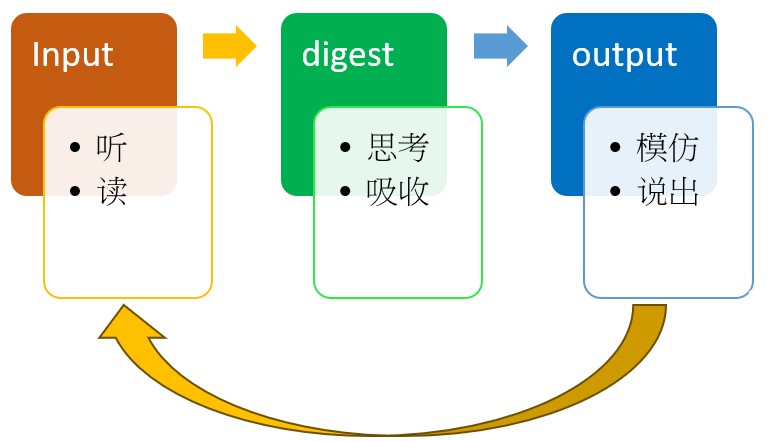
Input → digest → output

听 + 读 → 思考、吸收 → 模仿说出

学习流程示意:Input → digest → Output
学习流程:Input → digest → Output

当你在 output 卡住的时候,就回去 input。反复这个过程,多听、多读、多 shadowing,直到你能自然地、流畅地说出来。

下一步,从B2C2 ,不是「替换单词」或「改句子说法」,而是要累积无数个这样简单的 B1、B2 表达方式

当你能在这个等级下灵活运用、表达自如时,再往下一个阶段。

就像小学生一样,一个等级、一个等级慢慢往上。
不要一开始就逼自己进入对自己太难的层次,那样的挫败感只会让你放弃。

当你在A2 阶段时,我们要练习的,是「流畅地表达自己的想法与观点」。

所以我的内容不会只停留在教你怎么买 groceries、怎么讲 skincare(这些内容已经有太多博主在做了)。

我也不会只停留在「表达自己的内耗」。我会带你直接去理解内耗的原因、找到解法,而且——是用英文!

透过心理学、哲学、文化、创造力与自我成长等主题,带你一起学习、反思、练习思考。

我也试过小红书上那种「1 分钟英文影片」,
但我学到的只是单词或句子,that’s all
如果让我遇到相同话题,单词都懂,句子也听懂,但我却没有整个话题的想法,我还是讲不出「自己的想法」。
因为那种短影片没有真正的 Input → digest → Output 过程。

之后,当英文其实已经有一定基础,可以开始读原文书,每天三页就好(当然等级要选适合自己的,也就是 70%–80% 能看懂,剩下用字典或根据语境猜词义)。想想看,一本书 300 页,每天 3 页,
三个月你就能读完一本原文书——一本真正的英文书。

↑ 我是用这样的方式激励自己的。


上面废话很多,但我想传递的重点只有一个:
一定要不断反复 Input → digest → Output。

网站的文章内容也会提供「不同性格的人」在面对一个主题时的观点与说法。
你可以拿来参考、拼凑,最后转化成你自己的表达方式。
我建议边看边做笔记(对我来说,手写比打字更能记住内容,很多人其实都一样)。

题外话:每个人吸收方式不同。
有些人是「视觉型」学习,看比听更有效;
有些人是「听觉型」,听一次比看五次还记得住;
还有一些人是「经验型」,要亲自做过一次,才真的理解。

↑ 这是有依据的。你可以回想自己从小到大的学习方式,看看哪种方法最能帮助你吸收。

网站的内容能让你反复听、反复看、引发思考,你可以选择最适合自己的方式练习。
至于口说?
很简单——跟着念(shadowing),然后尝试不看稿,说出刚才的内容。

因为当你「要说」的时候,
你会「想」。
你的大脑会开始组织、整合。
那,才是你真正吸收的关键。

所以,你必须要『每一天』重复的 input (听 + 读) → digest (思考、吸收) → output (模仿说出),在 output 卡住的时候,就回去 input。反复这个过程,多听、多读、多 shadowing,直到你能自然地、流畅地说出来。

运用以下的方式,增加自己的记忆点,把整句、整段话内化到大脑中:

o 摘录 2~3 个句型的句型→默写 or 讲出来 (与你有关的句型、适合作为”表达你自己”的句型)

o 随身笔记本,每篇文写 3 句「属于你的版本」 → 隔天翻这个本子复习 → 没有看新的文章时,就复习这个,并且”说”出来。

o 录音说出来,自己听,反复的练习 (可以顺便训练舌头灵活度)

记住,你不需要一堆方式,选中一种,每天五分钟开始。

直到你习惯了、熟悉了,再增加时间、增加困难度。

你就能从语言学习者,成为能用英文表达思想、表达自己的人。